FAUST

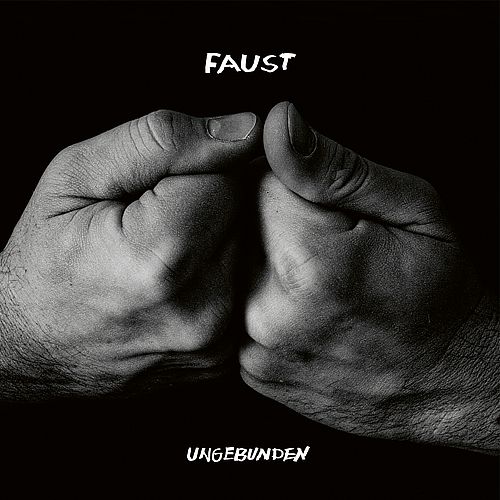
Ungebunden (curated by Hans-Joachim Irmler)

For over half a century, Hans Joachim Irmler has pursued the outer limits of sound. As a child, he would neglect his flute to pluck at the strings of his grandmother’s zither, cutting his fingers in search of greater resonance and volume. Drawn from an early age to the physical power of sound, he eventually found his instrument in the organ, whose vast sonic range offered seemingly endless possibilities; he still performs on the first organ he built himself. Expanding his sonic palette with synthesisers, tape manipulation and self-modified electronics, Irmler has relentlessly treated music less as composition than as a force of nature, capable of overwhelming, disorienting, destabilising and transforming both performer and listener alike. Ungebunden continues this trajectory. Recorded alone in the Faust studio in Scheer over the course of just three weeks, the album does not revisit Faust as a repertoire or a historical artefact, but as a continuous vessel for pure creativity. Working largely through improvisation, Irmler begins with little more than a direction or impulse, allowing the material to reveal its own logic as it unfolds.

Press Kit

FAUST

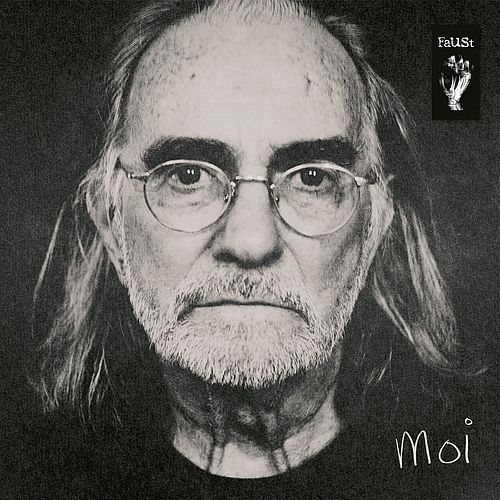
MOI (curated by Jean-Hervé Péron)

Since childhood, Jean-Hervé Peron has embraced creativity wherever he finds it. Whether duetting with the sound of his footsteps, collaborating with cement mixers or experimenting with whatever instrument he can get his hands on, play is at the heart of everything he does. This new album gathers ideas, memories and unfinished projects accumulated across his whole lifetime. Its tongue-in-cheek subtitle, ‘Maybe Of Interest’, offers a typically Peronian joke: MOI can suggest a certain self-confidence or egocentrism, yet the subtitle gently undercuts it, revealing the vulnerability, humour and self-awareness that run throughout the record. In fact, MOI is anything but solitary. Credited to FaUSt, with the "US" deliberately capitalised, the record reflects Péron's belief in collaboration, friendship and collective creativity, bringing together a wide network of musicians, engineers, writers and performers from across the extended Faust family. In fact, more than twenty people contributed to the recording sessions, making MOI as much a collective endeavour as a personal statement. Recorded over two winter weeks at Schiphorst studio in northern Germany and deftly combining the contradictory forces of meticulous planning, free improvisation and chance discovery, MOI draws equally from childhood memories, Fluxus principles, dadaist humour and deeply personal experiences. The resulting album moves effortlessly between musique concrète, avant-pop, jazz, spoken word and experimental electronics, united by Péron's curiosity and irrepressible sense of play.
Press Kit

FAUST

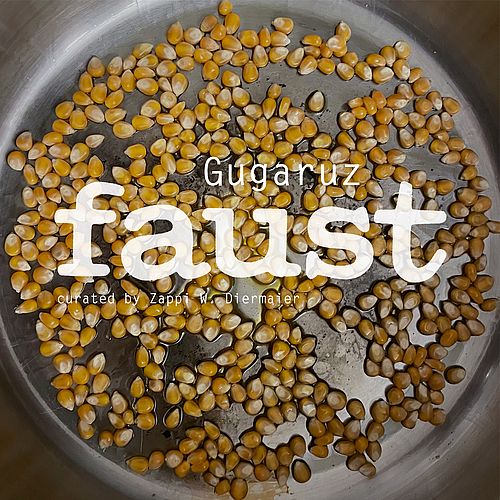
Gugaruz (curated by Zappi W. Diermaier)

Werner ‘Zappi’ Diermaier has spent decades channeling spontaneity into a unique rhythmic language; a direct, instinctive and vital beat born from the creative freedom which has long defined the spirit of Faust. This same intuitive approach is at the heart of his new LP ‘Gugaruz’, created in collaboration with Dirk Dresselhaus (Schneider TM) and Elke Drapatz, a record which grew organically from shared experiences, chance encounters and the energy of collective interaction. The project’s unlikely starting point came in a Vietnamese restaurant, when Diermaier pointed to a piece of pickled baby corn and exclaimed “Gugaruz”, an Austrian dialect word for maize. That small moment triggered a chain reaction of ideas that would eventually shape the album’s imagery, titles and sound world. Popcorn cooking in a kitchen both became the source material for field recordings used on the opening track and inspired the cover artwork, establishing a process in which everyday sounds and environments became integral musical elements.

Press Kit

FAUST

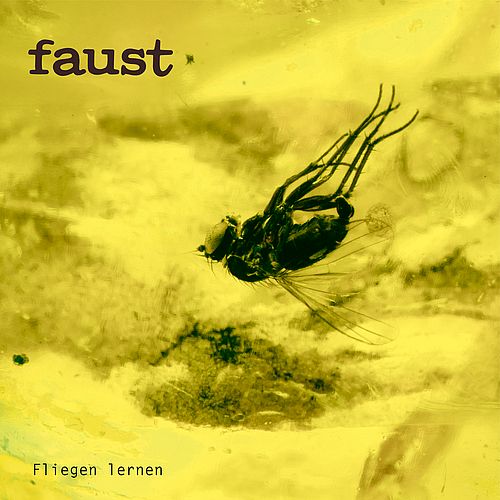
Fliegen lernen (curated by Gunther Wüsthoff)

For Wüsthoff, music began long before Faust. As a child he watched his father lose himself in music, playing accordion renditions of operettas, film themes and folk songs with complete absorption. At eleven he discovered jazz through a radio programme tracing its history, then taught himself guitar and piano as a teenager, developing an instinctive relationship with sound driven by curiosity rather than convention. That outlook would become central to Faust, not simply as a band but as an enduring way of thinking. Reflecting on those formative years, Wüsthoff describes them as the experience that shaped everything that followed: without Faust, he says, he would never have made this record in the way he has today. Produced by Onnen Bock alongside Bureau B's Gunther Buskies, Fliegen Lernen continues that philosophy. Drawn from decades of archived recordings, new studio experiments and collaborations with musicians in Hamburg, it is a living extension of Faust's open-ended creative spirit. Ideas emerge through chance as much as intention, with sounds, words and stories setting one another in motion until they gradually find their own form. Its title, simultaneously suggesting "flies are learning" and "learning to fly", perfectly captures the playful shifts in perspective that have long defined Wüsthoff's work. 

Press Kit

CLUSTER

Zuckerzeit

Released in 1974, Zuckerzeit marks a clear turning point in Cluster’s work, introducing shorter formats and a more defined rhythmic framework. The increased use of drum machines and structured sequencing sets it apart from the duo’s earlier, more diffuse recordings, while maintaining a focus on texture and tone. Developed in close proximity to Michael Rother and under increasingly independent production conditions, the album establishes a more direct and accessible approach without simplifying its underlying ideas. This standard edition makes the album available again on CD and vinyl following the previous limited anniversary release. A key recording in Cluster’s catalogue, capturing a pivotal moment of transition and refinement.

Press Kit

OSE

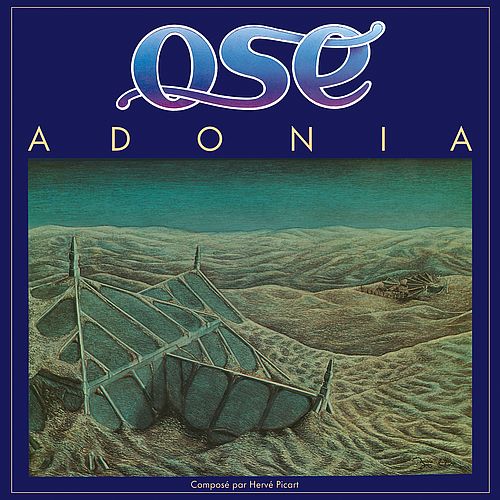
Adonia

Recorded in June 1978 during a sweltering Paris summer, Ose’s „Adonia“ captures a rare alignment of intellect, imagination and emerging technology. At just 26, Hervé Picart was living three parallel lives: scholar of rhetoric and ancient languages, journalist for the French music press (notably Best), and guitarist /bassist in progressive garage bands. Drawn increasingly away from British prog toward keyboards and synthesizers, he began envisioning a more spatial music situated somewhere between Pink Floyd, Tangerine Dream and Kraftwerk. That triangulation would define „Adonia“.

Press Kit

CONRAD SCHNITZLER

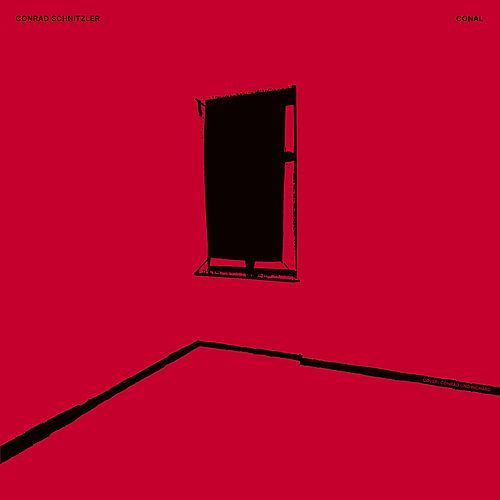
Conal

When "Conal" was released in 1981 on the Norwegian independent label Uniton Records with an initial run of 4,000 LPs, Schnitzler had already long been known beyond the borders of the Federal Republic of Germany and was now appreciated worldwide as a media artist and musician. In addition to the many cassette and LP editions he released himself, international labels were now increasingly releasing his music. In the same year as "Conal", for example, the album "Control" was released on the American label DYS, followed in 1986 by "Concert" in the USA and "Consequenz 2" in Spain. Schnitzler worked tirelessly and his total work of art, including his music, was becoming increasingly multifaceted. "Conal" is a good example of this development.

Press Kit

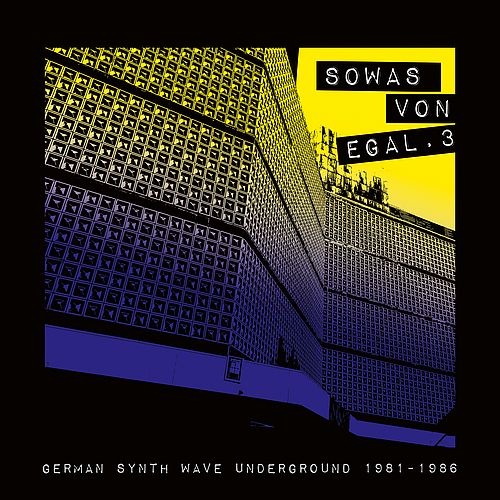
V.A. - SOWAS VON EGAL 3

German Synth Wave Underground 1981-86

With „Sowas von Egal 3”, the Hamburg-based Damaged Goods DJ team continues its compilation series on Bureau B, once again turning its attention to the underground scenes of Germany, Austria, and Switzerland in the early 1980s. The selected tracks originate from a period in which, alongside the commercial Neue Deutsche Welle (NDW), a number of innovative and often more abrasive bands and artists operated outside the mainstream. They combined influences from new wave, synthwave, post-punk, and the avant-garde with German lyrics – and occasionally other languages – releasing their music in very small editions on indie labels or entirely DIY. As a result, many of these records are now rare and highly sought after.

Press Kit

CLUSTER

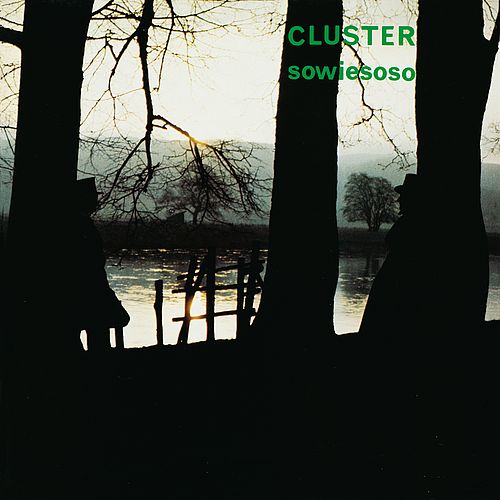
SOWIESOSO (50th Anniversary Edition)

Cluster – Hans-Joachim Roedelius and Dieter Moebius – occupy a central position in the evolution of European electronic music, moving from early experimental noise into more open, melodic forms without losing their exploratory edge. Released in 1976, Sowiesoso finds the duo working with a new sense of clarity and restraint, shaping gentle, cyclical pieces from a small set of tools and a deliberately reduced studio setup. The music unfolds with quiet precision, balancing repetition and variation while maintaining an understated rhythmic flow. Marking its 50th anniversary, the album is reissued as a limited LP edition on 180g vinyl, hand-numbered and restricted to 1000 copies. A defining work from Cluster’s mid-1970s period, presented in a carefully produced anniversary format.

Press Kit

HARALD GROSSKOPF

Glitches Brew

The legendary Harald Grosskopf continues his long-standing relationship with Hamburg’s Bureau B with Glitches Brew, a vital new LP and the latest stage in his ongoing dialogue with electronic possibility. The titular nod to Miles Davis’ masterpiece Bitches Brew reflects Grosskopf’s sense of humour, while also hinting at the album’s underlying theme: the productive friction between man and machine. Glitches Brew balances analogue intuition and digital immediacy, kosmische heritage and contemporary electronic language. It is the work of an artist still following his own ideas, still excited by sound, still testing the edges. Sixty years on from his first beat-group rehearsals, Harald Grosskopf remains what he has always been: a musician for whom rhythm is liberation, technology is possibility, and the future is something to invent again and again.

Press Kit