CLUSTER
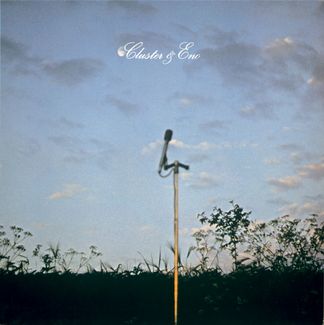
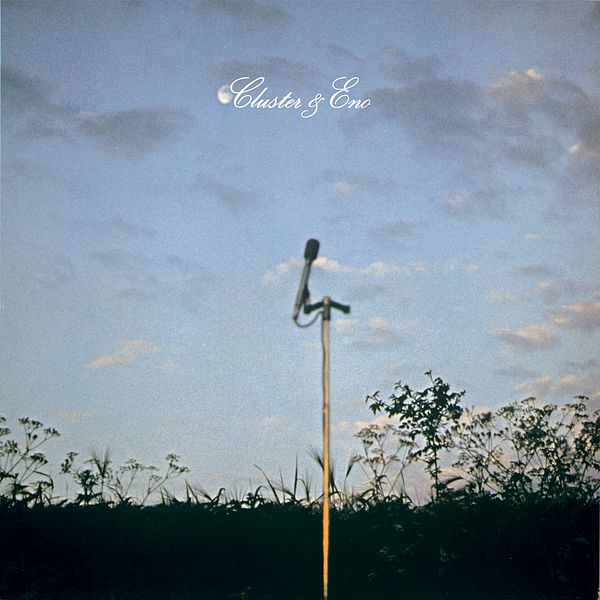
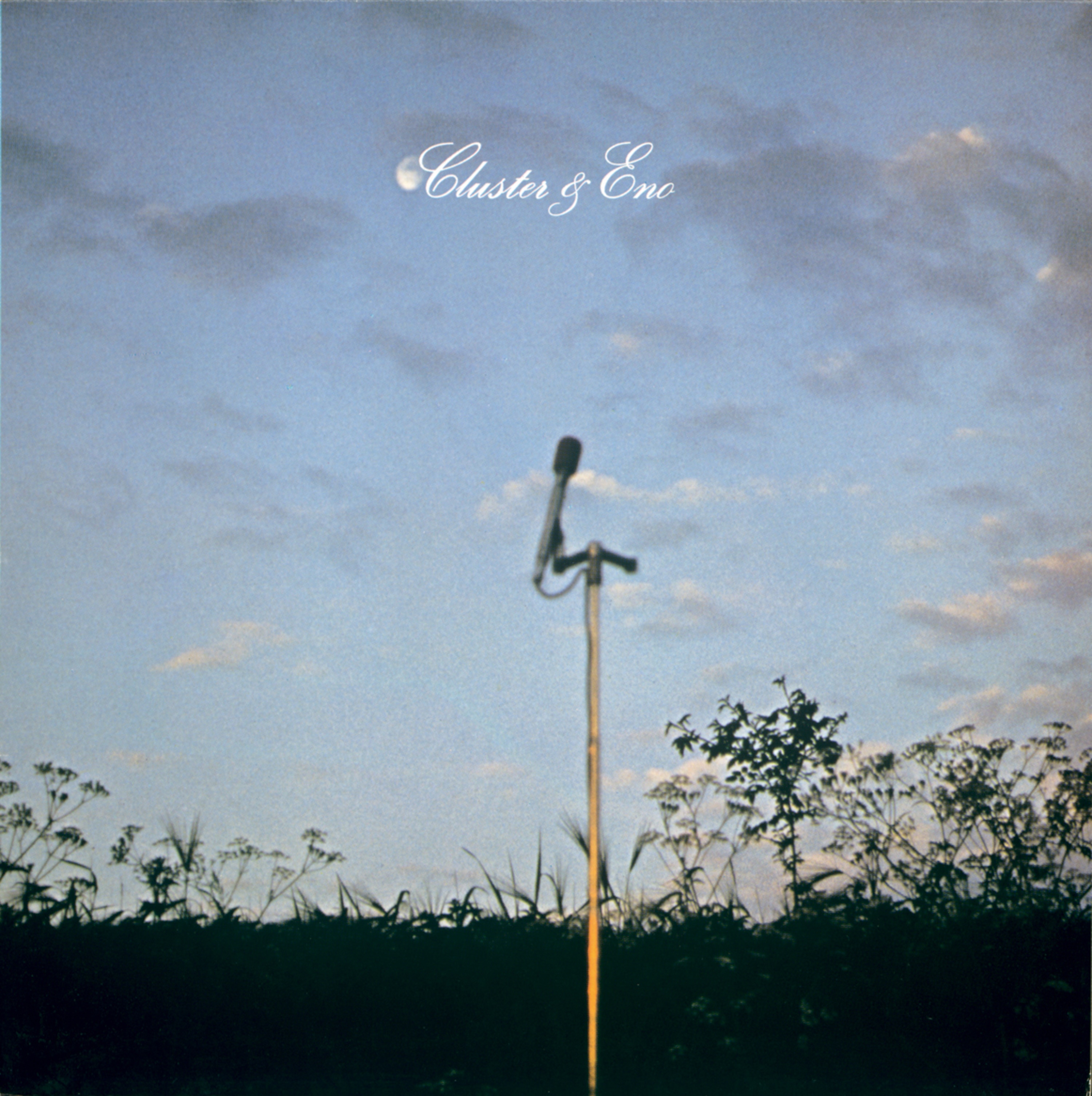
CLUSTER & ENO (50TH ANNIVERSARY EDITION) - out January 15, 2027
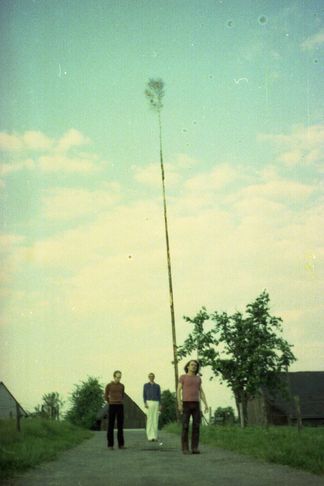
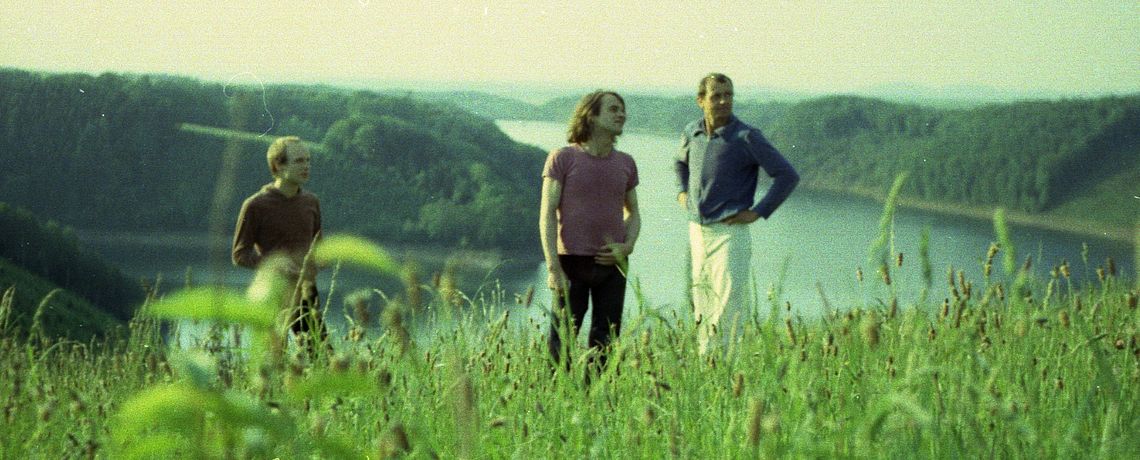
The meeting of Cluster’s Hans-Joachim Roedelius and Dieter Moebius with Brian Eno brought together three musicians who were independently reshaping the possibilities of electronic music in the 1970s. Recorded over three weeks at Conny Plank’s studio in 1977, Cluster & Eno grew out of a close exchange between Cluster’s open-ended approach to sound and Eno’s developing ideas around ambient music. Cluster’s melodic sensibility meets Eno’s precise approach to electronic sound, producing music that is warm and tactile while retaining a sense of distance and ambiguity. Fifty years after its original release, the album remains a landmark recording in the history of ambient and experimental music. The album is reissued for its 50th anniversary in a special edition.
Synergies unleashed
Cluster and Brian Eno spent most of June 1977 together in Conny Plank’s studio, a minor sensation in itself. Cluster had unequivocally played their way out of the Krautrock cul de sac, energizing electronic music so intensely that the effects can still be felt today. In 1977, Brian Eno still had something of the aura of Roxy Music’s bird of paradise, although he had already formulated his ambient concept on the Discreet Music album and developed the “Frippertronics” loop system with Robert Fripp (King Crimson). By this time he was miles away from the pop culture of Roxy Music. The eagerly anticipated Cluster and Eno collaboration was destined to unleash previously untapped synergies.
Cluster & Eno is the first of a pair of contrasting albums which were recorded within the space of three weeks in the studio. The second, After The Heat, was released the following year in 1978. The sparse instrumentation of Cluster & Eno exudes calm, a series of tracks with no obvious beginning or end, centred on minimal shades of sound – Cluster in strict ascetic mode. Still, the presence of Eno is no less audible. On the one hand, the musical vocabulary is clearly attributable to Cluster: minimalist piano, keyboard patterns and archetypal Roedelius percussion intertwined with electronic interpolations from Moebius. On the other, Eno soundscapes typically heard in his solo works can be identified in the background, aural clouds sporadically visible on the horizon.
Can Cluster & Eno be seen as a Cluster LP with Eno as a guest musician? Most definitely not! Eno’s influence on the album matches that of his counterparts, apparent in the structure of the individual pieces and the overall mood of the music. An atmosphere of relaxing calm, far removed from cosmic excursions or bland meditation, reflects Eno’s major invention of the 1970s: ambient music. Cluster & Eno is ambient music in its purest form. British music journalist Stephen Iliffe came up with the expression “silent interludes” to describe these pieces which no longer resembled songs as such, having more in common with Erik Satie’s “musique d’ameublement”, perceived in the same way as tastefully designed furniture or subtle perfume. Eno had studied Satie in detail and coined the phrase “ambient”, something his German contemporaries might have translated as “spatial design”, in this case the design of aural spaces.
So is Cluster & Eno an Eno album executed by Cluster? Once again, the answer is no! Ever since they began in 1968, Cluster defied classification in any specific genre. In the 1970s, their music advanced to a form of semi-improvised art, a meeting of live electronics and minimalism – without entering the realm of so-called highbrow music. In spite of coming from completely different directions, Moebius/Roedelius and Brian Eno reached similar conclusions in the mid-seventies. None of them felt the need to convince the others of a particular concept or working practice. Possessing musical talent in equal measure, their visions dovetailed neatly. The perfect basis for Cluster & Eno, an album, which might even lay claim to be the first ever ambient production on German soil.
Asmus Tietchens